
6 STAGE RO Plant
HYDROCLEAR 6 Stage RO Plant in Pakistan
Looking for a 6 Stage RO Plant in Pakistan for drinking and cooking water? The HYDROCLEAR 6 Stage RO Water System combines sediment filtration, activated carbon filtration, reverse osmosis, post-carbon polishing, and mineral filtration in one multi-stage purification system.
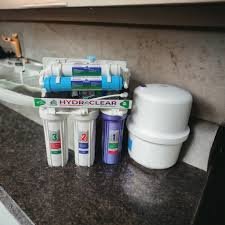
With a stated capacity of 100 gallons per day (GPD), a booster pump, an RO membrane, and a 4-gallon storage tank, this system is designed to provide a stored supply of treated water for suitable domestic and point-of-use applications. Actual output depends on incoming water quality, water pressure, temperature, membrane condition, and system configuration.
HYDROCLEAR 6 Stage RO Water System: Key Specifications
| Specification | Product details |
|---|---|
| Brand | HYDROCLEAR |
| System type | Six-stage reverse osmosis water purifier |
| Nominal capacity | 100 GPD, as supplied |
| Filtration stages | 6 |
| Booster pump | Included, as supplied |
| RO membrane | Included, as supplied |
| Storage tank | 4 gallons, as supplied |
| Final filtration stage | Mineral filter |
| Intended use | Drinking and cooking water, subject to source-water suitability |
Please confirm the exact model, component specifications, and rated performance before publication.
Six Stages of Water Filtration
The HYDROCLEAR six-stage configuration combines different filtration methods to address different water-quality concerns. Each stage has a specific function, and the system’s overall performance depends on the quality and suitability of its components.
Stage 1 – Sediment Filter
The sediment filter captures suspended particles such as sand, dust, rust, and silt. Removing these particles before the water reaches the carbon filters and RO membrane helps reduce the particulate load on downstream components.
Stage 2 – Granular Activated Carbon (GAC) Filter
Granular activated carbon adsorbs chlorine and certain compounds that can affect water taste and odor. Its effectiveness depends on the carbon media, water conditions, contact time, and cartridge condition.
Stage 3 – Carbon Block Filter
The carbon block provides another filtration and adsorption stage. It helps reduce residual chlorine and certain organic compounds when the cartridge is appropriately designed and maintained. This stage also helps protect the RO membrane from chlorine exposure when the membrane requires chlorine-free feed water.
Stage 4 – Reverse Osmosis (RO) Membrane
The reverse osmosis membrane is the principal dissolved-contaminant reduction stage. Water pressure forces water through a semipermeable membrane, separating much of the dissolved material into a concentrated reject-water stream.
Depending on the membrane and operating conditions, RO can reduce total dissolved solids (TDS), dissolved salts, and certain contaminants, including specific metals and microorganisms. Removal rates vary by contaminant and system design. Do not assume that the presence of an RO membrane alone guarantees removal of every contaminant or makes untreated source water safe.
Stage 5 – Post-Carbon Filter
The post-carbon filter polishes treated water by helping improve taste and reduce residual odors. Its performance depends on the cartridge media, condition, and correct installation.
Stage 6 – Mineral Filter
The final mineral filter is intended to add minerals such as calcium and magnesium to the treated water. The actual mineral content and resulting water chemistry depend on the cartridge formulation and operating conditions. Specific mineral concentrations should only be stated when supported by product documentation or testing.
How Does a Six-Stage RO Water Purifier Work?
Water passes through the filtration stages in sequence. The sediment and carbon prefilters treat incoming water before it reaches the RO membrane. The membrane reduces dissolved contaminants, and the post-carbon and mineral stages provide final treatment.
The treated water is stored in the tank for use when needed. RO systems also produce reject water, so water recovery and reject-water flow should be considered when assessing operating costs and environmental impact.
Potential Benefits of the HYDROCLEAR Six-Stage RO System
- Multi-stage treatment: Combines sediment filtration, carbon filtration, reverse osmosis, and final polishing.
- Chlorine and taste treatment: The carbon stages help reduce chlorine and certain taste- and odor-causing compounds.
- Dissolved-solids reduction: The RO membrane can reduce TDS and other dissolved contaminants, depending on operating conditions.
- Stored water supply: The stated 4-gallon tank provides storage, although usable draw-off volume may differ from nominal tank capacity.
- Mineral filtration: The final cartridge is intended to add selected minerals to the treated water.
- Compact point-of-use design: The configuration may suit a kitchen or another suitable installation point, depending on the actual dimensions and plumbing requirements.
These are functional benefits of the described configuration, not independent certification or proof of a specific removal rate.
Who May Need a Six-Stage RO System?
A point-of-use RO system may be appropriate for:
- Homes requiring treated water for drinking and cooking.
- Small offices needing a dedicated drinking-water supply.
- Clinics and educational facilities with suitable demand and water-quality requirements.
- Cafés and small businesses requiring water for beverages or food preparation.
For hospitals, restaurants with high water demand, schools with many users, or other commercial facilities, verify the required daily volume, peak flow, storage, water quality, and applicable hygiene requirements before choosing a domestic-style system. A larger commercial RO plant may be more suitable.
What Should You Check Before Buying an RO Plant?
1. Test the incoming water
Check relevant parameters such as TDS, hardness, pH, turbidity, and microbiological quality. Additional testing may be needed for contaminants associated with the local source. TDS alone does not identify every contaminant or establish drinking-water safety.
2. Confirm the actual production capacity
The stated 100 GPD is a nominal rating, not a guarantee of the amount produced under all conditions. Confirm the manufacturer’s test conditions and expected output using your source water.
3. Verify the membrane and filter specifications
Ask for the membrane model, performance data, compatible replacement cartridges, and any applicable third-party certification. Do not rely on the number of stages alone to judge purification performance.
4. Check storage and daily demand
A 4-gallon tank is a nominal storage specification. The usable draw-off volume can be lower, and tank refill time varies. Consider the number of users and the timing of peak demand.
5. Plan maintenance and replacement
Prefilters, carbon cartridges, membranes, and post-treatment cartridges require periodic inspection and replacement. The schedule should follow the manufacturer’s instructions and reflect incoming water quality and usage.
6. Confirm installation requirements
Check the available water pressure, electrical supply for the booster pump, drain connection for reject water, space for the unit, and suitable plumbing. Installation should follow the manufacturer’s instructions.
Frequently Asked Questions
1. What is a 6 Stage RO Plant?
A six-stage RO plant combines six treatment stages, commonly including a sediment filter, two carbon filters, an RO membrane, a post-carbon filter, and a mineral cartridge. The precise configuration varies by model.
2. What does a 100 GPD RO system mean?
GPD means gallons per day. A 100 GPD rating represents a nominal production capacity under specified test conditions. Actual output may be lower and depends on pressure, temperature, feed-water quality, membrane condition, and system design.
3. Does a six-stage RO system reduce TDS?
An appropriately selected and functioning RO membrane can reduce TDS. The actual reduction should be checked by comparing feed-water and treated-water measurements and confirming the membrane’s performance specifications.
4. Does reverse osmosis remove bacteria and viruses?
RO membranes can reduce many microorganisms, but performance depends on the membrane, system integrity, and operating conditions. Do not assume complete microbial protection without suitable validation and any additional treatment required for the source water.
5. Why does an RO system use activated carbon filters?
Activated carbon adsorbs chlorine and certain organic compounds that may affect taste and odor. Properly selected carbon prefilters can also help protect chlorine-sensitive RO membranes.
6. What is the purpose of the mineral filter?
A mineral cartridge is intended to add selected minerals to the treated water and may alter taste. The actual mineral concentrations depend on the cartridge and should not be assumed without testing.
7. How often should RO filters be replaced?
There is no universal replacement interval for every system. Follow the manufacturer’s schedule and adjust servicing according to water quality, usage, pressure, and filter condition.
8. Is a 4-gallon storage tank enough?
It depends on daily demand and how many people use the system. Nominal tank capacity is not the same as usable draw-off volume. Compare actual storage and refill performance with your expected usage.
9. Is a six-stage RO system suitable for every water source?
No. Suitability depends on the source-water analysis, contaminants present, operating limits, and treatment requirements. Some water sources need pretreatment or additional validated disinfection.
10. How can I request details about the HYDROCLEAR 6 Stage RO Plant?
Contact HYDROCLEAR to confirm the current model, price, component specifications, installation requirements, and suitability for your water source before placing an order.
Request Information About HYDROCLEAR
Choosing a water purification system starts with understanding your water quality and daily requirements. Contact HYDROCLEAR to discuss the six-stage RO configuration, confirm specifications, and request a quotation.
HYDROCLEAR – Drink Pure!
Website: https://hydroclearpro.com/
Phone: 0321-8892404
Confirm current availability, pricing, installation coverage, and warranty terms with HYDROCLEAR before purchase.