Poultry Farm RO Plant
Poultry Farm RO Plant in Pakistan – HYDROCLEAR
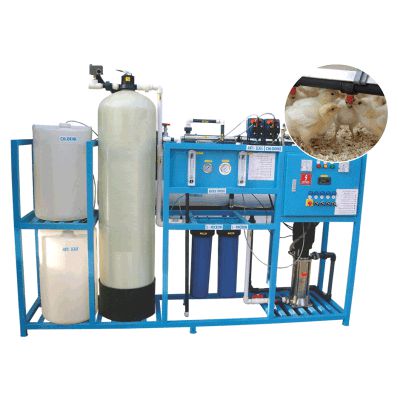
Looking for a poultry farm RO plant in Pakistan to treat bore water, tube-well water, or another challenging water source? HYDROCLEAR offers a stated capacity range of 6,000 to 35,000 GPD for poultry-related water treatment requirements.
A suitable reverse osmosis (RO) system can reduce dissolved salts and selected contaminants when designed for the source water and operated under appropriate conditions. The right plant depends on your water analysis, daily consumption, peak demand, and the quality required at the poultry drinkers.
Whether you operate a broiler farm, layer farm, breeder facility, or a larger poultry complex, begin with a water-quality assessment and a realistic estimate of your daily water demand.
Contact HYDROCLEAR to discuss your poultry farm’s water-treatment requirements and request a quotation.
HYDROCLEAR Poultry Farm RO Plant – Capacity Options
HYDROCLEAR’s stated product capacity range is 6,000–35,000 gallons per day (GPD). The following table converts selected capacities into approximate litres per day, assuming US gallons.
| Nominal capacity | Approximate equivalent |
|---|---|
| 6,000 GPD | 22,712 litres/day |
| 10,000 GPD | 37,854 litres/day |
| 20,000 GPD | 75,708 litres/day |
| 25,000 GPD | 94,635 litres/day |
| 35,000 GPD | 132,489 litres/day |
These figures are mathematical conversions, not guaranteed production rates. Actual permeate output depends on the feed water, temperature, operating pressure, membrane condition, system design, and other operating conditions.
Before ordering, confirm the rated output of the selected model and the conditions under which its capacity is specified.
Why Is Water Treatment Important for Poultry Farms?
Water is a core part of poultry farm management. Water quality can affect the suitability of drinking water, the performance of drinker systems, and the condition of pipelines and related equipment.
Water may contain dissolved minerals, suspended particles, iron, manganese, or microbiological contaminants. Some issues are visible, while others require laboratory analysis.
The University of Veterinary and Animal Sciences in Pakistan identifies parameters such as pH, total dissolved solids (TDS), hardness, sodium, chloride, calcium, sulphate, and nitrate as relevant poultry-water testing parameters.
The appropriate treatment should be selected according to the results rather than assuming that every water source requires the same purification process.
What Is a Poultry Farm RO Plant?
A poultry farm RO plant is a water-treatment system designed to process water for an agricultural or poultry-related application. Reverse osmosis uses pressure to move water through a semi-permeable membrane, reducing many dissolved salts and selected other constituents in the feed water.
The resulting treated water is called permeate. The concentrated stream containing a higher proportion of retained constituents is commonly called concentrate or reject water.
RO may be useful where laboratory results identify elevated dissolved salts or other contaminants that the selected membrane system is designed to reduce. It is not a universal substitute for pretreatment, microbiological control, or ongoing water-quality testing.
How Does Reverse Osmosis Work?
A properly designed RO plant generally uses several treatment and monitoring components. The exact configuration should be selected after evaluating the incoming water.
1. Feed-water assessment
The process begins with an assessment of the water source. Testing may include TDS, pH, hardness, alkalinity, iron, manganese, sulphate, nitrate, and microbiological parameters, depending on the source and intended use.
2. Pretreatment
Pretreatment helps prepare the water before it reaches the RO membrane. Depending on the analysis, it may include sediment filtration, multimedia filtration, activated carbon, iron or manganese treatment, softening, or chemical dosing.
Not every installation requires every treatment method. Incorrect or insufficient pretreatment can contribute to fouling, scaling, and reduced membrane performance.
3. Reverse osmosis membrane treatment
The RO membrane reduces dissolved salts and selected contaminants. The amount removed depends on membrane specifications, operating conditions, feed-water chemistry, and the particular contaminant.
4. Treated-water collection
The permeate is collected and supplied to the intended application. Storage tanks, transfer pumps, and distribution lines should be sized to meet the farm’s demand and kept hygienic.
5. Monitoring and maintenance
Operating pressure, feed and permeate flow, conductivity or TDS, and other relevant indicators can help identify changes in performance. The monitoring plan should follow the system design and manufacturer’s recommendations.
Key Considerations When Choosing a Poultry RO Plant
Match capacity to actual water demand
A poultry farm needs enough water during peak demand, not merely enough under average conditions. Demand can vary with flock size, bird age, weather, cooling arrangements, cleaning, and other farm activities.
Estimate daily consumption and identify the busiest periods before selecting a capacity.
Test the source water
Do not choose a plant based on TDS alone. Two sources with similar TDS readings may contain different minerals or contaminants and therefore require different pretreatment.
For poultry operations in Pakistan, the Poultry Research Institute lists water tests that include pH, TDS, total hardness, sodium, potassium, chloride, calcium, sulphate, and nitrate.
Confirm the required treated-water quality
The treatment target should be established with appropriate poultry or veterinary guidance and the laboratory results. RO can remove useful as well as unwanted dissolved constituents, so the target should not automatically be “the lowest possible TDS.”
Review the full system configuration
Before purchasing, request the technical specification for the selected model. Confirm the membrane arrangement, pump specifications, pretreatment stages, instrumentation, control system, expected permeate flow, recovery rate, and any included storage or dosing equipment.
Consider reject-water management
RO generates a concentrate stream in addition to treated water. The volume and quality of this stream depend on system design and feed-water conditions. Plan for appropriate drainage or disposal and check local requirements.
Which Poultry Operations Can Consider an RO Plant?
Broiler farms
Broiler operations may consider RO where source-water analysis shows that dissolved salts or other treatable contaminants require reduction. Capacity selection should reflect flock size, seasonal conditions, and the water needed at drinkers.
Layer farms
Layer farms should assess water chemistry and microbiological quality alongside flock demand. Treatment requirements should be based on the source-water analysis and the farm’s operating needs.
Breeder farms and hatcheries
Breeder facilities and hatcheries may have specific water-quality requirements. A system should be selected only after confirming the quality needed for each intended use.
Large poultry complexes
Larger operations may need a more detailed assessment of peak demand, storage, distribution, monitoring, redundancy, and future expansion. A single nominal capacity figure is not enough to establish whether a plant will meet every operational requirement.
Poultry-related medicine and veterinary facilities
Veterinary, pharmaceutical, and laboratory applications may have water-quality requirements that differ from poultry drinking water. These applications should be assessed separately; a poultry farm RO configuration should not be assumed suitable for pharmaceutical or laboratory use without confirming the required specifications.
RO Plant vs. Other Water Treatment Methods
Reverse osmosis is one option among several water-treatment methods. The appropriate choice depends on the contaminants identified by testing.
| Treatment method | Main purpose | Important consideration |
|---|---|---|
| Sediment filtration | Reduces suspended particles of a size captured by the filter | Does not remove most dissolved salts |
| Activated carbon | Can reduce chlorine, odour, taste, and selected organic compounds, depending on the media and design | Does not reliably address every dissolved contaminant or provide complete disinfection |
| Water softening | Reduces calcium and magnesium hardness through an appropriate softening process | Conventional ion-exchange softening exchanges ions and does not generally reduce overall TDS |
| Reverse osmosis | Reduces many dissolved salts and selected contaminants | Requires suitable pretreatment, operation, and concentrate management |
| Disinfection | Controls susceptible microorganisms when properly designed and operated | Must be selected for the water quality, target organisms, contact conditions, and intended use |
These methods may be used separately or together. The treatment train should be determined from the actual water analysis rather than from a standard package alone.
Installation and Maintenance
Proper installation and regular monitoring help maintain the intended performance of a poultry water-treatment system.
Before installation, confirm the available space, feed-water supply, electrical requirements, drainage, and the route from treated-water storage to the points of use.
A maintenance programme may include:
- Inspecting pretreatment filters and servicing them when required.
- Monitoring feed-water and permeate flow.
- Checking pressure readings and system alarms.
- Measuring treated-water conductivity or TDS as appropriate.
- Reviewing membrane performance and cleaning requirements.
- Inspecting tanks, pipes, and drinker lines for deposits or biofilm.
- Testing water quality at the source, after treatment, and at representative points of use.
Poultry water guidance also recommends maintaining drinker systems, changing filters as needed, and flushing water lines where appropriate. The precise schedule should follow the manufacturer’s instructions and the farm’s conditions.
If water quality changes, flow drops unexpectedly, or a flock-health concern arises, consult a qualified water-treatment professional and a poultry veterinarian as appropriate. Water treatment should not be presented as a substitute for veterinary diagnosis or farm biosecurity.
How to Select the Right Capacity for Your Farm
Before choosing a 6,000–35,000 GPD poultry farm RO plant, prepare the following information:
- Number and type of birds: Broilers, layers, breeders, or other poultry operations.
- Daily water consumption: Actual readings are preferable where available.
- Peak demand: Include relevant seasonal demand and other water uses such as cooling or cleaning.
- Source water: Bore, tube well, municipal supply, surface water, or another source.
- Water analysis: Provide recent laboratory results and identify any known quality problems.
- Treated-water target: Specify where the water will be used and the required quality.
- Storage and distribution: Estimate storage needs and check flow requirements at the farthest drinker.
- Installation requirements: Confirm electrical supply, drainage, space, and service access.
These details help determine whether the selected capacity and treatment configuration are appropriate.
Poultry Farm RO Plant Price in Pakistan
The price of a poultry farm RO plant depends on capacity and the actual equipment included in the system. Feed-water quality and installation conditions can also affect the total project cost.
Factors that may affect a quotation include:
- Required nominal production capacity.
- Source-water analysis and pretreatment needs.
- Membrane and pump specifications.
- Instrumentation and automatic controls.
- Storage and treated-water distribution.
- Installation, commissioning, and operator training.
- Maintenance requirements and replacement components.
HYDROCLEAR’s current price for each capacity has not been provided here. Request a quotation for the selected model and ask for a written specification that explains what is included.
Frequently Asked Questions
What is a poultry farm RO plant used for?
It treats water for poultry-related applications when the source-water analysis shows that reverse osmosis is an appropriate part of the treatment process. The final treatment design should address the identified contaminants and intended use.
What capacity range is available from HYDROCLEAR?
The stated range provided for this product is 6,000–35,000 GPD. Confirm the available models and their rated operating conditions with HYDROCLEAR before ordering.
How many litres per day is 6,000 GPD?
Assuming US gallons, 6,000 GPD is approximately 22,712 litres per day. This is a unit conversion, not a guarantee of actual plant output.
Can RO reduce high TDS in poultry water?
Reverse osmosis can reduce many dissolved salts and therefore often reduces TDS. The actual reduction depends on feed-water chemistry, membrane specifications, operating conditions, and membrane condition. Laboratory testing should be used to assess the result.
Does every poultry farm need reverse osmosis?
No. Some farms may need filtration or disinfection, while others may need RO or a combination of treatments. Water analysis and the intended use should guide the decision.
What tests should be conducted before buying a poultry RO plant?
Depending on the source, testing may include pH, TDS, hardness, sodium, chloride, calcium, sulphate, nitrate, iron, manganese, and microbiological indicators. A qualified laboratory or water-treatment professional can recommend the appropriate test panel.
Does an RO plant remove bacteria?
RO membranes can reduce many microorganisms when the system is properly designed and maintained, but the result should not be assumed to guarantee microbiological safety. Treatment validation, hygienic storage, distribution, and suitable disinfection may also be required.
How often should an RO plant be serviced?
There is no single interval suitable for every farm. Service needs depend on feed-water quality, usage, pretreatment, membrane performance, and the manufacturer’s instructions. Monitor operating data and test the water regularly.
Can the same RO plant be used for poultry and pharmaceutical applications?
Not automatically. Pharmaceutical and laboratory applications may require different specifications, validation, sanitisation, monitoring, and documentation. The required standard must be established separately for each application.
How can I get a quotation from HYDROCLEAR?
Provide the required capacity, farm location, source-water report, daily water demand, and installation requirements. This helps HYDROCLEAR review the application and prepare a more relevant quotation.
Request a Poultry Farm RO Plant Quotation
Need a water-treatment solution for your poultry operation?
Contact HYDROCLEAR to discuss your source water, daily demand, and required capacity. Share your latest water analysis and ask for the technical specification of the proposed plant.
Website: https://hydroclearpro.com/
Phone: 0321-8892404
Email: info@hydroclearpro.com
HYDROCLEAR – Water Treatment Solutions for Commercial and Industrial Requirements.
Request a quotation to discuss a suitable poultry farm RO plant for your application.